DK&E Academy — The Lyceum
Ancient Principles. Modern Precision.
The first thing human beings ever wrote down was not a poem, or a prayer, or a law. It was a count.
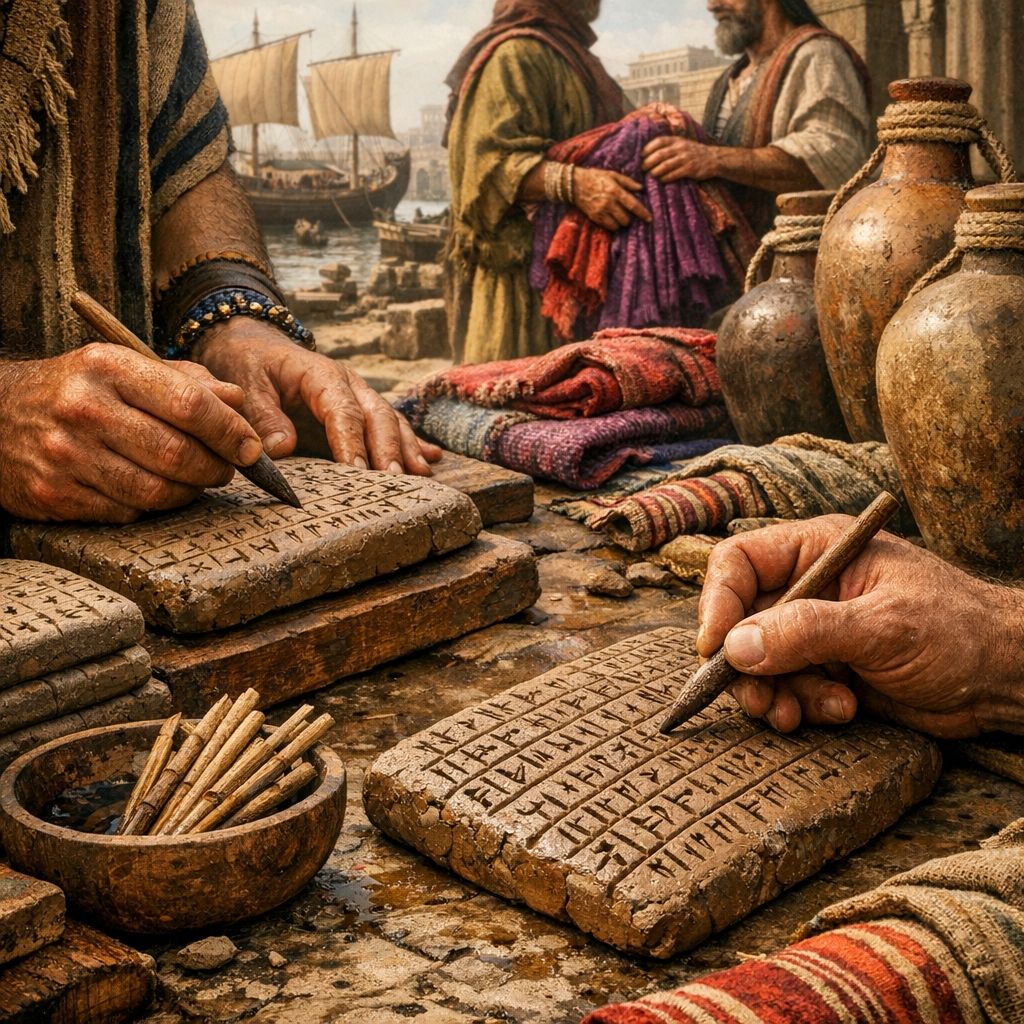
Over five thousand years ago in Uruk, someone pressed marks into wet clay to record grain, livestock, and who owed what to whom. The earliest writing we possess is not literature — it is bookkeeping. Writing appears to have been invented for the job.
The tools have been replaced many times since: clay, papyrus, wax, parchment, paper, ledgers, spreadsheets, the cloud. In 1494 a Franciscan friar named Luca Pacioli printed the method Venetian merchants had already been using for two hundred years. Five centuries later, every accounting system on earth still runs on it. Debits and credits have outlived the Roman Empire, the printing press, and every company that promised to make them obsolete.
Because recording the entry was never the difficult part. Deciding what the entry means — that is the work. No machine has ever done it.
Every business keeps numbers. Almost nobody reads them. Revenue looks healthy while the account runs dry; the books balance perfectly and explain nothing; a client asks a question, and the answer is a guess.
That is not a software problem. It is a formation problem — and it is exactly why this academy exists.
College teaches you accounting. The Lyceum teaches you to read, question, and diagnose a business.
Bookkeeping mastery. Business diagnostics. Excel fluency.
The Cost of Guessing
The numbers don't lie — but they whisper long before they shout. A late payment here, a miscategorized expense there, a reconciliation skipped "just this once." None of it looks dangerous in the moment.
Most businesses don't fail because someone had a bad idea. They fail because nobody read the numbers closely enough to catch it in time.
WHAT THE LYCEUM TEACHES
Rules are the foundation. Judgment is what sets you apart.
Whether you're changing careers, starting fresh, or fixing what's already broken — this is where serious financial education begins.
Ancient Principles. Modern Precision.
Learn the foundations. Master the profession.
There is only one standard here.
Every assignment is reviewed personally by the person who designed the curriculum and spent twenty-five years in practice.
No assistants. No grading teams. No automated evaluations.
You will not be trained to use software.
You will be trained to understand what the software is trying to say.
The Introduction Is Complimentary
Two complimentary modules. Five to six lessons each. A real assignment at the end.
No credit card. No obligations.
Your work won't be evaluated by an algorithm. It will be personally reviewed, graded, and returned with feedback from the founder herself.
You'll understand exactly what awaits inside the Path before making any commitment.
So will we.
You Practice on Real Businesses, Not Textbook Examples
Every form, every case, every assignment comes from a business with its own mess — an auto shop, a grocery, a café, a service company. Different industries. Different problems. Numbers that refuse to cooperate, the way they do in practice.
And one business you never leave: Golden Crumb Bakery & Café. You meet it as a shoebox of receipts and bank statements. You build its books from nothing, close its first year, watch it open a second location, hunt a fraud hidden in its payables, and hand over a year-end package a CPA can work from without a single question.
By the time you finish, you haven't studied bookkeeping.
You've kept the books.
And one business you never leave: Golden Crumb Bakery & Café. You meet it as a shoebox of receipts and bank statements. You build its books from nothing, close its first year, watch it open a second location, hunt a fraud hidden in its payables, and hand over a year-end package a CPA can work from without a single question.
By the time you finish, you haven't studied bookkeeping.
You've kept the books.
If you think rigorous bookkeeping training is expensive, try hiring a bookkeeper who never had any.
Claim Your Place at The Lyceum
Spots are limited by design — not as a marketing tactic, but as a matter of standards. Every module includes exercises, quizzes, and assignments graded personally, by hand, by the founder herself. No outsourced grading. No automated feedback. That level of attention only scales to 4–6 students a month.
No chatbots. No scripts. No sales team.
At The Lyceum, we answer questions the old-fashioned way — directly, and with full command of the subject.
Start Your Journey. Send Your Inquiry.
Copyright © 2026